How to Find and Contact Influencers in 2026
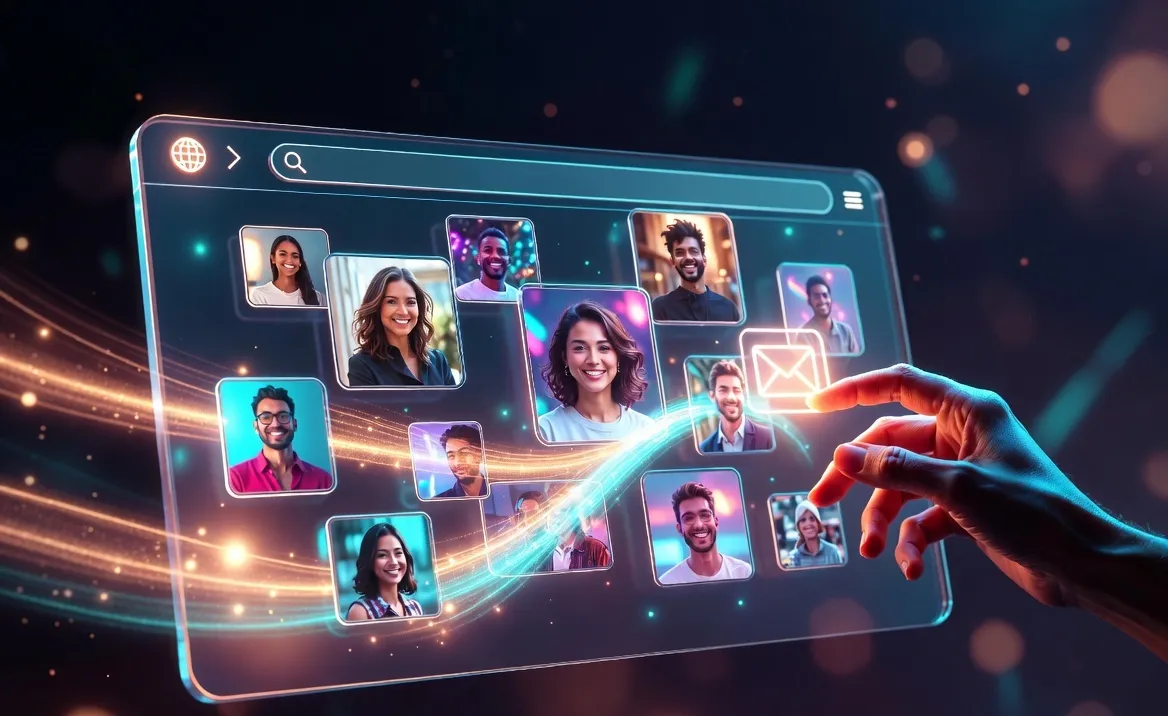
Influencer marketing in 2026 is not about finding people with followers.
It is about finding people whose audience already cares about the problem you solve, and who can make that audience take a real action: click, call, book, buy, download, visit, message, or remember you.
That difference matters.
The creator economy is now a serious marketing channel. Goldman Sachs has projected that the creator economy could approach $480 billion by 2027. Platforms are also making creator campaigns more measurable through tools like TikTok creator collaboration products, Instagram creator marketplace, partnership ads, and YouTube Creator Partnerships.
But better tools do not automatically create better campaigns.
Most brands still make the same mistake:
They search for influencers by category instead of searching for creators by audience intent.
They look for "fitness influencers," "tech influencers," "mom influencers," "business influencers," or "lifestyle influencers."
That is too broad.
The better question is:
Who already has the trust of the exact people we want to reach, around the exact problem we solve?
This guide gives you a practical system for finding those creators, checking whether they are worth paying, contacting them properly, and setting up campaigns that are measurable from day one.
Start With the Customer Problem
Do not begin with:
Find me 50 influencers.
Begin with:
Who is already creating content for people who have this problem?
For example:
| Business | Weak search | Better search |
|---|---|---|
| SaaS product | Tech influencers | Creators teaching the workflow your product improves, comparing tools, or showing before-and-after systems |
| Ecommerce brand | Lifestyle influencers | Creators reviewing similar products, answering buyer objections, or demonstrating real use cases |
| Creator tool | Creator influencers | Creators showing content workflows, editing stacks, monetization systems, and audience-growth experiments |
| Education product | Student influencers | Creators helping people learn a skill, compare courses, prepare for exams, or choose career paths |
| Wellness brand | Fitness influencers | Creators documenting routines, habits, goals, product testing, or audience transformation journeys |
The best creator is not always the person with the biggest audience.
The best creator is the person whose audience is already close to buying, searching, comparing, asking, complaining, or trying to solve the problem.
Before searching, write this sentence:
I want creators whose audience is trying to __________,
but struggling with __________.
Example:
I want creators whose audience is trying to choose the right marketing tool,
but struggling with comparing options, proving ROI, and knowing what workflow to follow.
That one sentence will improve your creator search immediately.
Define Creator-Market Fit
Most brands know what product-market fit means.
Influencer marketing needs a similar idea: creator-market fit.
A creator has creator-market fit when their audience, content, trust, and platform match your offer.
Use this profile before building your list:
- Audience: Are the creator's followers potential buyers, users, visitors, leads, or referrers?
- Problem match: Does the creator already talk about the problem you solve?
- Trust: Do people ask them for recommendations, reply seriously, or say they tried something because of them?
- Content fit: Can your product or service appear naturally in their content?
- Action potential: Can the creator drive calls, DMs, WhatsApp messages, bookings, sales, app downloads, store visits, or lead forms?
- Cost fit: Can you afford a small test without needing the campaign to be perfect?
If you cannot answer these questions, you are not ready to contact creators yet.
Know Which Creator Type You Need
"Influencer" is too vague. In 2026, you need to know which type of creator you actually need.
Search Creators
Search creators make content that people actively look for.
Examples include:
- Best tools for content creators
- How to compare influencer marketing platforms
- Best budget marketing tools for small teams
- How to build a better content workflow
- Product review before buying [category]
They are useful for YouTube, TikTok search, Instagram search, Google-indexed videos, local SEO, and evergreen discovery.
They may not always go viral, but their content can keep bringing attention for months.
Trust Creators
Trust creators have audience belief.
They may not have huge reach, but people listen when they recommend something. This matters in healthcare, finance, parenting, education, B2B software, professional services, and other high-trust categories.
For trust-heavy businesses, this creator type can outperform a flashy lifestyle influencer.
Community Creators
Community creators may run Facebook groups, WhatsApp groups, local Instagram pages, neighborhood pages, newsletters, Reddit communities, event pages, or cultural community pages.
For a local business, these creators can be extremely valuable because they already control local attention.
A community page with 15,000 real local followers can be more useful than a lifestyle influencer with 150,000 broad followers.
Expert Creators
Expert creators are professionals who also create content: marketers, operators, founders, consultants, analysts, designers, educators, coaches, finance professionals, healthcare professionals, and software practitioners.
They are useful when credibility matters more than entertainment.
Review Creators
Review creators test, compare, visit, rank, or audit.
They are useful for brands that need proof, comparison, demonstration, or a clear before-and-after story.
UGC Creators
UGC creators may not have a large audience. Their value is content production.
Hire them when you need strong videos for ads, landing pages, product demos, testimonials, or social proof. Do not hire a UGC creator expecting their audience to drive sales unless they also have distribution.
Conversion Creators
Conversion creators can sell.
You can identify them by discount codes, affiliate links, product demos, "I bought this because of you" comments, strong calls to action, and audience questions about price, availability, booking, or where to buy.
They are useful for ecommerce, apps, subscriptions, local offers, service bookings, and direct-response campaigns.
Search by Intent, Not Hashtags
Hashtags are often noisy. Search for the phrases customers use when they are already in the problem.
For product discovery:
- best [product category] for [audience]
- [product] review
- [product] alternatives
- is [product] worth it
- [product] vs [competitor]
- best budget [category]
- things to know before buying [category]
For workflow or problem research:
- how to solve [problem]
- mistakes when doing [workflow]
- tools I use for [workflow]
- how to improve [result]
- why [workflow] is not working
- best way to start [activity]
- beginner guide to [problem]
For ecommerce buying intent:
- products I actually use for [use case]
- [category] haul
- [product] before and after
- honest review of [product]
- affordable [category] products
- premium vs budget [category]
- what to buy for [use case]
For SaaS and software comparison:
- apps I actually use
- best tools for [team type]
- software for [workflow]
- [tool] tutorial
- [tool] alternatives
- how to automate [workflow]
- best apps for [audience]
- apps that save money
- how to choose [software category]
For creator and business growth:
- how to grow on [platform]
- content tools for creators
- influencer marketing tips
- creator monetization tools
- small business marketing tools
- how to plan campaigns
- how to find brand deals
Search these on TikTok, Instagram Reels, YouTube, YouTube Shorts, Google, Reddit, Facebook groups, LinkedIn, podcasts, newsletters, and local community pages.
The best creators are often found through the content itself, not only through influencer databases.
Use Creator Marketplaces, but Do Not Depend on Them
Creator marketplaces are useful because they can give you audience data, category filters, creator insights, campaign tools, and performance context.
Use them to:
- verify audience location
- check content category
- review past partnership signals
- compare creator performance
- manage outreach
- run partnership ads
- scale campaigns after a test works
Useful platform tools include TikTok creator marketplace, Instagram creator marketplace, and YouTube Creator Partnerships.
But do not rely only on marketplace search.
Everyone else can search there too.
Your edge usually comes from manual research:
- comment mining
- local community discovery
- competitor campaign research
- search-based content research
- podcast and newsletter discovery
- finding creators before they become obvious
Marketplaces are good for validation and scaling. Manual research is better for finding underpriced, high-fit creators early.
Mine Comment Sections Like a Researcher
Do not only watch a creator's videos.
Read the comments.
The comments tell you whether the audience is passive or ready to act.
Look for three signals.
Pain
Strong comments sound like:
- This happened to me.
- I need this.
- How much does this cost?
- Where can I find someone reliable?
- Do you know anyone in my area?
- Can you make a list?
These comments show demand.
Trust
Strong comments sound like:
- I tried this because of you.
- Your recommendations are always good.
- I was waiting for your review.
- Can you recommend someone?
- You saved me money.
These comments show influence.
Buying Intent
Strong comments sound like:
- Is this available in my country?
- Does this work for small teams?
- Where do I sign up?
- How much does it cost?
- Is there a free trial?
- What is the price?
- Can you send the link?
These comments show action potential.
A creator with 12,000 followers and strong buying-intent comments can outperform a creator with 200,000 followers and generic comments.
Reverse-Engineer Competitor Campaigns
Search for competitors, substitute products, and adjacent businesses.
Use queries like:
"[brand name]" "#ad"
"[brand name]" "paid partnership"
"[brand name]" "discount code"
"[brand name]" "gifted"
"[brand name]" "sponsored"
"[brand name]" "ambassador"
"[brand name]" "review"
Look for:
- which creators promoted them
- what content angle they used
- whether the audience responded
- whether people asked about price, booking, location, or availability
- whether comments looked real
- whether the creator made the offer feel natural
- whether the post was boosted as a partnership ad
Do not copy the same creators blindly.
Use competitor campaigns to understand which creator types already work in your category.
Localize the Creator Strategy
Do not copy-paste one campaign across every market.
The core brand promise can stay the same, but the creator type, platform, language, proof, and call to action often need to change.
A campaign written for Canada or the U.S. may not work the same way in places where people rely more on local language, family trust, messaging apps, marketplace links, or region-specific creator culture.
The mistake is saying:
- same English script
- same creator type
- same CTA
- same platform
- same offer
- same tone
A better approach:
- same brand promise
- different local execution
- local language
- local proof
- local CTA
- local trust signals
- local conversion path
In local-language markets, broad national reach can be overrated. A smaller creator with the right language and local connection can be more useful than a bigger creator with a generic audience.
Search by city, region, language, dialect, community, buyer type, problem, income level, and local trust.
Conversation-based CTAs often work better in messaging-heavy markets:
- Comment your city and we will send details.
- DM "INFO" for the list.
- WhatsApp us for pricing.
- Send this to someone who needs this.
- Ask us before you book, pay, or buy.
WhatsApp Business has reported that consumers are more likely to purchase from a brand that offers messaging, which supports why conversation-based CTAs can work in markets where buyers ask questions before converting.
Be Careful in Regulated or High-Trust Markets
In some categories and regions, creator selection needs extra care.
Trust is not only about entertainment. It is also about credibility, presentation, cultural awareness, family-safe content, and professionalism.
Look for creators with:
- strong local credibility
- professional content quality
- clear audience location
- good reputation
- experience with brand collaborations
- proper disclosure habits
- ability to communicate in the audience's real language
The brief should be tighter than a casual creator brief.
Include:
- approved claims
- words or visuals to avoid
- disclosure wording
- cultural considerations
- usage rights by country
- confirmation that the creator can publish sponsored content compliantly
In some markets, influencer advertising can require permits or licensing. For example, the UAE Media Council describes advertiser permit requirements, and Saudi Arabia's Mawthoq service covers licensing for individuals providing advertising content through social media platforms.
So do not only ask for a rate card.
Also ask:
Can you confirm whether you have the required local permit, license, or process to publish sponsored content in your market?
Score Creators Before Contacting Them
Use a simple 100-point score.
| Factor | What to check | Score |
|---|---|---|
| Audience fit | Are these people your target customers? | /10 |
| Location fit | Are they in the right city, country, or region? | /10 |
| Language fit | Do they speak the audience's real language or dialect? | /10 |
| Problem fit | Does the creator already discuss the problem you solve? | /10 |
| Trust | Do comments show belief and action? | /10 |
| Average views | Are recent posts consistently watched? | /10 |
| Comment quality | Are comments specific, not generic? | /10 |
| Content quality | Can they make your offer look natural? | /10 |
| Cost fit | Can you afford a small test? | /10 |
| Compliance and brand safety | Are disclosure, permits, claims, and reputation handled properly? | /10 |
Decision rule:
- 85-100: Strong fit. Prioritize.
- 70-84: Good fit. Test if pricing is reasonable.
- 55-69: Maybe. Keep in your database.
- Below 55: Skip unless there is a specific reason.
Do not overvalue followers. Average views, location fit, language fit, trust, and comment quality usually matter more.
Ask for the Right Data Before Paying
Before agreeing to a campaign, ask for a media kit or screenshots.
Audience data:
- top cities
- top countries
- age range
- gender split, if relevant
- audience interests
- main audience language
Performance data:
- average views on recent posts
- story views
- link clicks, if available
- saves and shares, if available
- past campaign examples
Commercial terms:
- rate card
- deliverables included
- usage rights cost
- paid ad usage cost
- turnaround time
- revision policy
- exclusivity terms
- disclosure process
For local campaigns, top cities may matter more than total followers. For ecommerce campaigns, past product clicks, affiliate sales, and marketplace performance can matter more than likes.
Avoid Fake Influence
Avoid creators with:
- high followers but weak recent views
- generic comments
- repeated comments from suspicious accounts
- audience mostly outside your market
- every post being sponsored
- no clear niche
- sudden unexplained follower spikes
- poor communication
- refusal to share basic audience data
- no clear disclosure on past sponsored posts
- content that could damage your brand reputation
The best sign of influence is specific audience behavior.
Look for comments like:
- How do I book?
- Where is this?
- Do they serve my area?
- What's the price?
- Can you send the link?
- I used your code.
- I bought this after your video.
- Can you recommend someone?
That is real influence.
Contact Creators With a Specific Reason
Most weak outreach sounds like this:
Hey, we love your content. We want to collaborate. Let us know your rates.
That message is too lazy.
A good message proves three things:
- You watched their content.
- You understand their audience.
- You have a clear paid opportunity.
Use this structure:
Hi [Name],

I saw your post about [specific topic]. The reason I am reaching out is because your audience seems to care about [specific problem].

We are [Brand], and we help [target customer] with [specific result].

I would like to explore a paid collaboration around [specific content idea].

Would you be open to sharing your rates or media kit?
Bad:
We love your content.
Better:
Your video comparing content planning tools had creators in the comments asking which workflow to use. That is exactly the audience we are trying to reach.
Specificity creates replies.
DM Template
Use this for Instagram, TikTok, or other short-form platforms:
Hi [Name], I saw your video about [specific topic], especially the part where you mentioned [specific detail].

I am reaching out from [Brand]. We help [specific audience] solve [specific problem].

I think your audience would genuinely care because they already ask about [pain point] in your comments.

Would you be open to a paid collaboration?

I am thinking something simple to test:

- 1 Reel/TikTok/Short
- 3 story frames
- unique link, code, DM keyword, WhatsApp CTA, or marketplace link
- permission for us to repost organically

Can you send your rates or media kit?
Email Template
Subject: Paid collaboration idea for [Creator Name] x [Brand]

Hi [Name],

I am [Your Name] from [Brand].

I found your [video/post/channel] about [specific topic], and it stood out because your audience is already discussing [specific pain point].

We help [target audience] with [specific result].

I would like to explore a paid collaboration around:

- [Deliverable 1]
- [Deliverable 2]
- [Deliverable 3]

Could you send your media kit, audience breakdown, and rates?

Also, please include any usage rights pricing if we want to repost or run the content as an ad.

If it looks like a fit, I can send a short brief.

Thanks,
[Your Name]
[Company]
Follow Up Without Sounding Desperate
Follow up once after 3 to 5 days.
Hi [Name], just following up on this.

I still think there is a strong fit because your audience seems to care about [specific problem].

Open to seeing your rates if you are accepting brand collaborations this month.
Then follow up one final time.
Hi [Name], last follow-up from me.

Would you be the right person to discuss paid collaborations, or is there an email or manager I should contact?

Thanks either way. I like what you are building around [topic].
After that, move on. Do not beg. Build a better list.
Start With a Paid Test
Your first collaboration should usually be a small paid test.
Starter campaign:
- Goal: Test whether this creator can drive awareness, leads, downloads, bookings, calls, messages, or sales.
- Deliverables: One short-form video, three story frames, one trackable CTA, basic performance screenshots, and 30-day organic reposting rights.
- Tracking: UTM link, discount code, call tracking number, landing page, booking form question, DM keyword, WhatsApp keyword, or marketplace affiliate link.
- Payment: Fixed fee with optional performance bonus.
The first campaign is not about perfection.
It is about learning:
- Did the creator understand the offer?
- Did the audience care?
- Did people ask questions?
- Did people click, call, message, book, download, visit, or buy?
- Was the content good enough to reuse?
- Would you work with this creator again?
Give Creators a Strong Content Angle
Do not say:
Please promote our app.
Say:
Make a video about three mistakes creators make when planning sponsored content, then show how our tool helps organize campaigns from idea to outreach.
Do not say:
Promote our SaaS product.
Say:
Show the difference between managing creator outreach in scattered spreadsheets and managing the same campaign with a clear workflow.
Do not say:
Promote our ecommerce product.
Say:
Use the product in a real routine and explain who it is actually useful for, what problem it solves, and what buyers should know before ordering.
Creators need more than a product. They need a story their audience would actually watch.
Send a Clear One-Page Brief
Once a creator replies, do not send a messy 10-page document.
Send one clear brief:
- Brand: Who you are.
- Goal: Awareness, app downloads, bookings, sales, calls, leads, or UGC content.
- Target audience: Who the content should speak to.
- Main message: One sentence.
- Creator angle: Why this fits their content.
- Required points: Three to five points they should cover.
- Avoid: False claims, competitor attacks, non-compliant wording, and anything culturally insensitive.
- Deliverables: Format, story frames, CTA, raw file expectations, organic reposting rights, and paid usage rights.
- Timeline: Draft due date, post date, and report due date.
- Tracking: Link, code, DM keyword, call tracking, or landing page.
Give creators the message and angle, not a robotic word-for-word script.
The only exceptions are regulated categories or campaigns that legally require exact wording.
Protect Usage Rights Before the Campaign Starts
Paying for a post does not automatically mean you can use the creator's content forever.
Clarify:
- Can you repost it organically?
- Can you run it as a paid ad?
- Can you use the creator's face, name, or handle in ads?
- For how long?
- On which platforms?
- In which countries?
- Can you edit the video?
- Is raw footage included?
- Is exclusivity included?
This matters because many brands amplify creator content through paid ads. Meta describes partnership ads as a way for advertisers to amplify content with a creator or partner handle, and YouTube Creator Partnerships connects creator videos with advertiser workflows.
Use a simple usage clause:
Organic reposting:
Brand may repost the final approved content organically on owned social channels.

Paid usage:
Paid ad usage is not included unless agreed separately in writing.

If paid usage is approved:

- Usage period: [30/60/90 days]
- Platforms: [TikTok, Instagram, Facebook, YouTube]
- Territory: [Canada / U.S. / selected countries / global]
- Fee: [$X]
Get this in writing before anything is posted.
Follow Disclosure Rules
Influencer marketing must be clearly disclosed when there is a material connection between the creator and the brand.
In the U.S., the FTC says influencers need to disclose their relationship to a brand when making endorsements. In Canada, the Competition Bureau says disclosures should use plain and clear language, and that tagging a brand, posting a discount code, or linking to an affiliate page is unlikely to be enough by itself. Ad Standards Canada also says material connections should be disclosed clearly, prominently, and close to the representation being made.
Practical rule:
If the creator was paid, gifted, given a discount, given free service, given commission, given affiliate income, or has a business/family relationship with the brand, disclose it clearly.
Clear disclosures:
- #ad
- #sponsored
- Paid partnership with [Brand]
- Gifted by [Brand]
- I earn commission from this link
Weak disclosures:
- #collab
- #partner
- Thanks to [Brand]
- Link in bio
- Use my code
Weak disclosures may not be clear enough by themselves.
Do not treat disclosure as optional.
Track More Than Views
Do not judge every campaign only by immediate sales.
Track four levels of impact.
Attention
- Views
- Reach
- Watch time
- Completion rate
- Profile visits
Trust
- Saves
- Shares
- Comments asking real questions
- DMs
- WhatsApp messages
- Positive sentiment
- Brand searches
Action
- Link clicks
- Calls
- Form submissions
- App downloads
- Bookings
- Purchases
- Promo code uses
- Marketplace orders
- Affiliate sales
Content Value
- Can the video become an ad?
- Can it go on your website?
- Can your sales team use it?
- Can it explain your product better than your own content?
- Can it be repurposed into multiple clips?
Sometimes a creator may not drive many immediate sales, but their video becomes your best-performing ad creative.
That still has value.
Build a Creator Database
Do not manage creator outreach from memory.
Use a spreadsheet or CRM.
Track:
- name
- handle
- platform
- city
- country
- niche
- main language
- audience fit
- location fit
- average views
- comment quality
- top audience location
- past brand deals
- rate
- usage rights cost
- contacted date
- reply status
- follow-up date
- notes
- score out of 100
- campaign result
- whether you would work with them again
Over time, this becomes a marketing asset.
Most businesses restart from zero every time they need creators. Better businesses build a creator network.
Use a Weekly Outreach System
Do not message 100 random creators.
Use a focused weekly system:
- Monday: Find 25 potential creators.
- Tuesday: Shortlist the best 10.
- Wednesday: Research their posts, comments, audience fit, and past brand deals.
- Thursday: Contact five with personalized messages.
- Friday: Follow up with old contacts and update your database.
Five researched messages are better than fifty lazy ones.
What to Say When They Ask for Your Budget
Do not only say:
What are your rates?
That is acceptable, but it gives you no control.
Say this:
We are testing a few creators first, so we are looking for a starter package around [budget range] for:

- 1 Reel/TikTok/Short
- 3 story frames
- basic performance screenshots
- 30-day organic reposting rights
- one trackable CTA

If your standard package is different, send it over and I will review.
This shows you are serious, but not blindly overpaying.
Choose Believability Over Fame
The best influencer is not always the most polished.
It is the person who can say your message and make people believe it.
In 2026, audiences are more skeptical. They know when a creator is reading a script. They know when a product has nothing to do with the creator's life. They know when enthusiasm is fake.
So look for creators who already live in your category.
If you sell to creators, find creators other creators trust.
If you sell to parents, find creators parents believe.
If you sell locally, find creators who are actually local.
If you sell internationally, find creators who speak the audience's real language and understand the culture.
If you sell a high-trust service, find creators with credibility, not just reach.
The formula is simple:
Right audience
+ real trust
+ natural content fit
+ clear offer
+ localized CTA
+ proper tracking
+ clear disclosure
+ fair usage rights
= influencer campaigns that actually work
Influencer marketing is not magic.
It is relationship-building with people who already have attention and trust.
Find the right creators, contact them with a thoughtful offer, test small, measure honestly, and double down on the creators who actually move people to act.
Want to bring structure to influencer discovery, outreach, and campaign planning?
Viral Suite is building one platform for the entire social media workflow, rom content creation to social media management to social media marketing, including paid ads and influencer marketing.